The Shadow Fleet: how a hidden armada moves sanctioned oil
Over nine months, the IAOIJ Cross-Border Desk and 34 partner reporters mapped a parallel shipping system — 600-plus ageing tankers, hidden owners and insurance that may not exist — built to keep sanctioned crude flowing across the world's oceans.
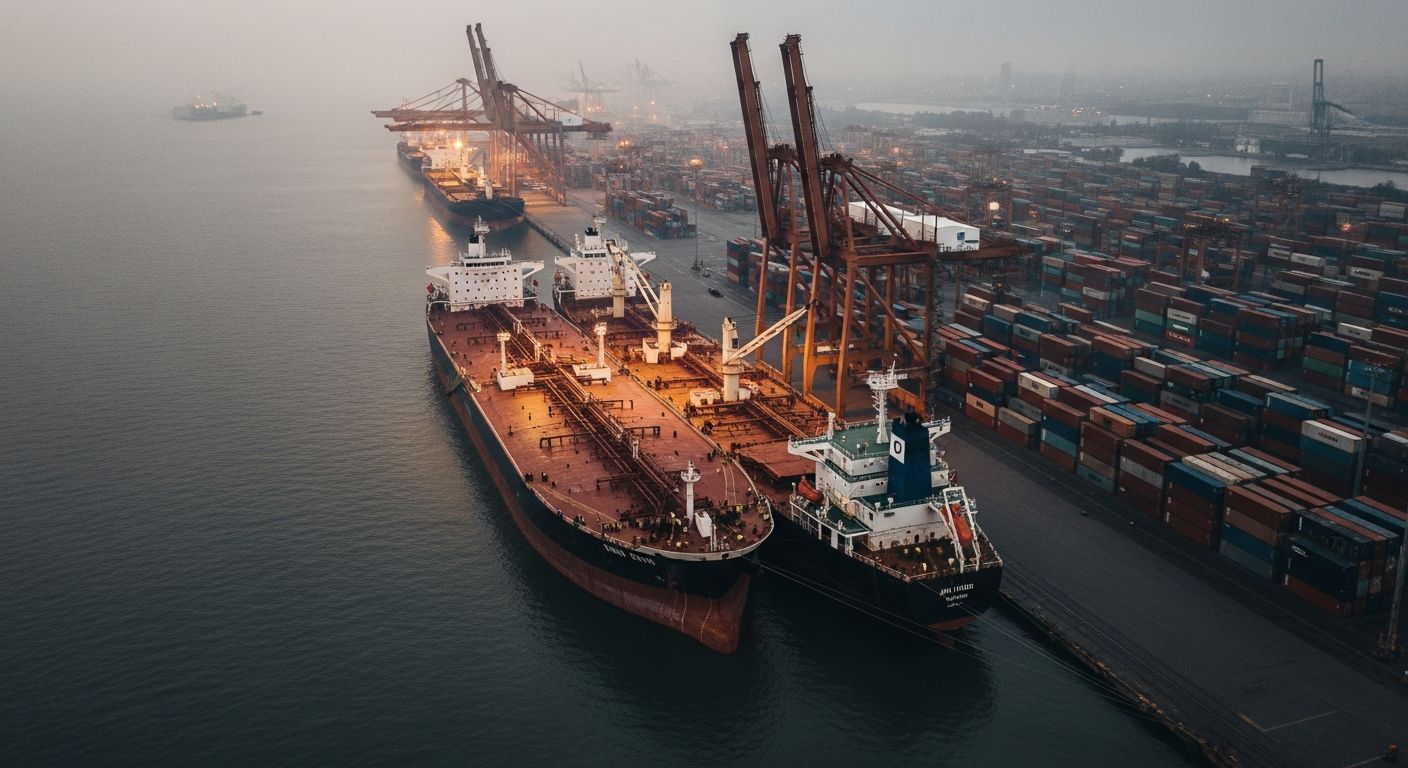
On a moonless night in the Gulf of Oman, a 20-year-old supertanker called the Aurelian Crest switched off the transponder that is supposed to broadcast her position to the world. For eleven hours she was, officially, nowhere. When the signal returned she was riding lower in the water, close to two million barrels heavier, and flying a flag she had not worn the week before.
That vanishing act, repeated thousands of times a year, is the operating system of what the industry has come to call the shadow fleet: a sprawling, deliberately opaque armada of ageing tankers assembled to keep sanctioned oil moving after Western governments tried to shut it out of the legitimate market. Over nine months, the IAOIJ Cross-Border Desk and 34 partner reporters in 34 countries set out to map it — hull by hull, owner by owner, insurer by insurer.
What we found is not a black market at the margins of global trade. It is a parallel system, large enough to move a meaningful share of the world's crude, hiding in plain sight behind shell companies, flags of convenience and paper insurance — and quietly tolerated by ports, registries and brokers who have decided not to look too closely.
A fleet built to disappear
Working from a merged database of satellite ship-tracking records, port-call logs, classification-society registers and corporate filings from 14 jurisdictions, reporters identified more than 600 tankers that carry the hallmarks of the shadow fleet: elderly hulls bought at a premium, owners registered to mailbox addresses, and a settled habit of going dark at sea.
Most are between 15 and 22 years old — past the age at which mainstream traders and insurers will touch them. Many were bought in a buying spree over the past three years by companies that had never owned a ship before and, in some cases, dissolved within months of the purchase. By the Desk's cargo modelling, these vessels carried an estimated $61bn of sanctioned crude in 2025 alone, most of it lifted from a handful of terminals and delivered, after one or more mid-ocean transfers, to refineries that ask no questions.
The economics are simple. A tanker that can no longer earn in the open market — too old to insure, too risky to charter — is worth far more to someone who needs deniability than to a scrapyard. Buy it through a company no one can trace, and a rusting liability becomes a floating asset.
“These ships are not hiding from us. They are hiding from responsibility. Everyone in the chain has arranged their affairs so that, when something goes wrong, there is no one left to hold.” — Captain Isabel Moreno, former marine casualty investigator
Flags of convenience
Every merchant ship must fly the flag of a state, which is meant to enforce safety and environmental rules and vouch for the vessel to the rest of the world. The shadow fleet has turned that system inside out. Reporters documented more than 90 vessels that changed name, flag or registered owner within a single year — a churn that makes any ship almost impossible to follow across databases.
The flags cluster in a small set of registries that sell their nationality cheaply and check very little: Gabon, the Cook Islands, Palau, Cameroon and Honduras appear again and again in our data. Several are administered not by the state itself but by private companies operating the register from an office in another country entirely. When the Desk sent detailed questions to one of these administrators, it deflagged 41 tankers within three weeks — a quiet admission that it had never properly known who owned them.
Reflagging is not merely bureaucratic housekeeping. A ship that switches from a scrutinised flag to an obscure one sheds inspections, insurance requirements and the paper trail that ties it to its cargo. In the space of an afternoon, a sanctioned tanker can become, on paper, a different vessel with a clean history.
Who insures the ships
For a century, the tankers of the world have been covered by a small club of mutual insurers — the “P&I clubs” — that pool the enormous risk of an oil spill and stand behind a ship if it breaks apart on a reef. Those clubs will not knowingly insure sanctioned trade. So the shadow fleet has grown its own.
Reporters identified at least eleven insurers, most incorporated in the past two years, issuing certificates of cover that ports accept at face value and that no independent body can verify. One, calling itself Meridian Marine Mutual, listed a capital base smaller than the cost of cleaning up a single grounding, and shared a registered address with a company that also “owned” nine of the tankers it insured. Several certificates we examined named contact numbers that rang out, or offices that did not exist.
The consequence is not abstract. If one of these tankers spills two million barrels off a coastline, the certificate in the captain's safe is likely to be worthless, and the clean-up bill — potentially billions — would fall on the nearest coastal state.
The ports that look away
Sanctioned oil rarely travels in a straight line from loading terminal to refinery. Instead it is passed from ship to ship in international waters, a manoeuvre known as a ship-to-ship transfer that launders the cargo's origin as effectively as any bank. Using ship-tracking data, the Desk mapped clusters of these transfers off the Laconian Gulf in southern Greece, in the approaches to the Malacca Strait and in the Gulf of Guinea — quiet stretches of sea where two tankers can sit side by side for a day and emerge with their histories scrambled.
The transferred crude then arrives at ports that, by law, are supposed to check a vessel's insurance, ownership and safety record before letting it dock. In interviews, three former port officials described the same pressure: the cargo is valuable, the paperwork looks complete, and asking harder questions is not what anyone is paid to do. “The documents were always perfect,” one told us. “That was the problem.”
What the data shows
The spine of this investigation is data. Ships broadcast their position over a system called AIS, and the shadow fleet's central trick is to switch it off — or, more brazenly, to spoof it, transmitting a false location while the vessel sails somewhere else entirely. By cross-referencing satellite radar imagery with the gaps in AIS records, the Desk's data team identified thousands of hours of “dark” sailing that lined up precisely with suspected transfers and port calls.
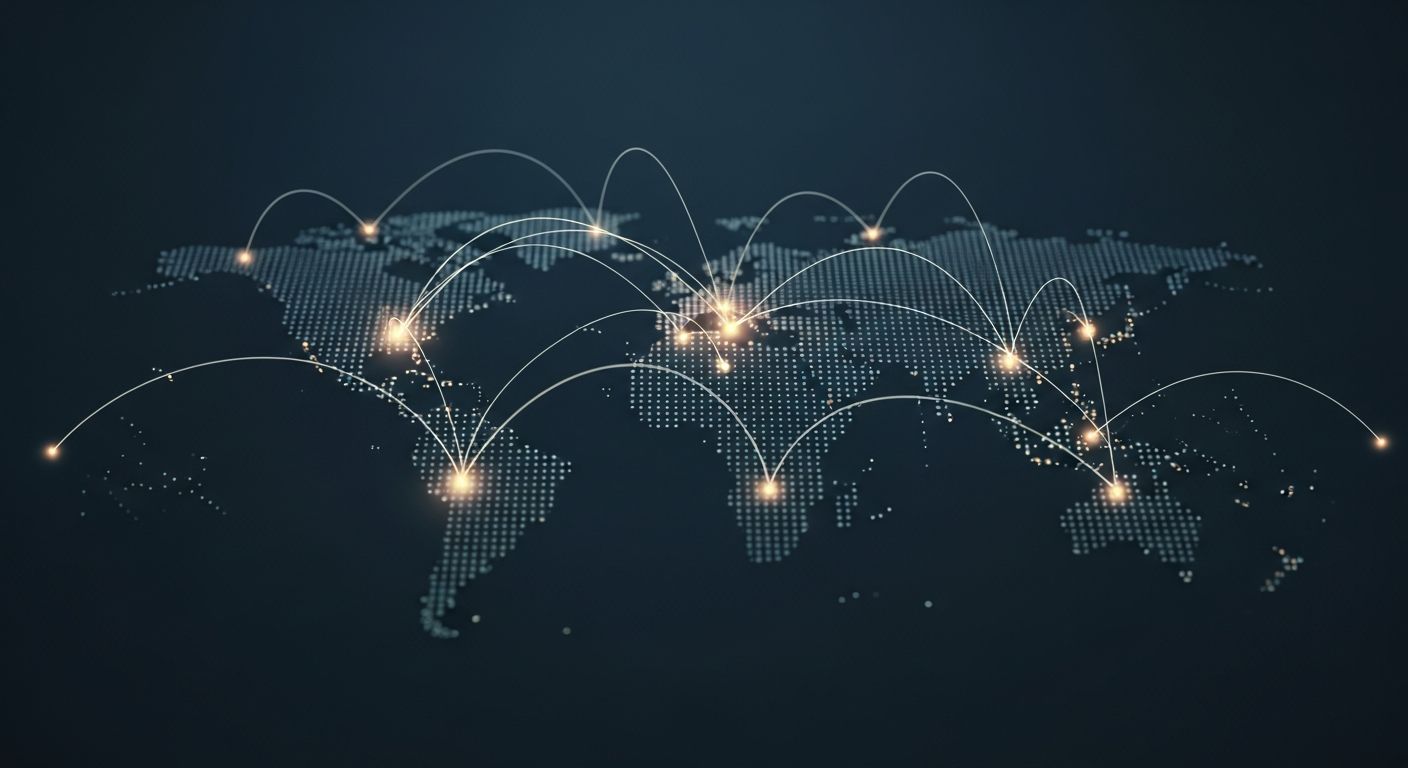
Ownership was harder, and more revealing. Pulling filings from corporate registries in 14 countries, reporters followed the chains of shell companies upward until the branches converged: 143 of the tankers traced back to just nine management companies, most of them sharing offices in three secrecy jurisdictions and, in several cases, the same director. The armada that looks so fragmented on the water is, on paper, remarkably concentrated.
Response & impact
The IAOIJ put detailed findings to every company, insurer and registry named in this investigation. Most did not respond. Two management firms denied any wrongdoing and said they complied with all applicable law; one insurer said its cover was “fully valid” but declined to provide evidence of its reserves.
The reporting has already moved things. Beyond the 41 deflaggings, regulators in three jurisdictions added a combined 60 vessels to their designation lists in the days after publication, and a parliamentary committee in one partner country opened an inquiry into how the shadow fleet's insurance is accepted at its ports. The tankers, meanwhile, are still sailing — and the Desk is still reporting.
The IAOIJ Cross-Border Desk coordinated this investigation with 36 partner newsrooms. Reporting, data analysis and verification were shared across the coalition; the full methodology and datasets are available to members in the Resources & Data centre.